Choosing the right Enameled Aluminum Round Wire supplier requires more than comparing prices. The wire may look similar on a catalog page, yet its insulation, conductivity, and winding performance can differ greatly. A reliable supplier should provide clear technical data, stable production records, sample testing, and responsive engineering support.
Dr. S. O. Kasap, a recognized electrical materials specialist, states, “The electrical properties of a material are determined by its structure.” This principle applies directly to Enameled Aluminum Round Wire. Alloy composition, conductor diameter, enamel thickness, curing quality, and surface cleanliness can influence motor efficiency and transformer reliability. Small variations matter.
This guide reviews seven suppliers using practical criteria. These include manufacturing experience, insulation options, dimensional consistency, quality certifications, customization, delivery capability, and after-sales support. We also consider whether each company explains its test methods clearly. That detail often reveals more than polished marketing language.
No supplier is perfect. A strong manufacturer may offer excellent insulation but limited export support. Another may deliver quickly but provide weaker documentation. That trade-off deserves attention. Buyers should verify voltage ratings, thermal class, breakdown strength, and bonding performance before placing large orders. Requesting samples is sensible.
Look closely. Ask better questions.
The following supplier comparison is designed for engineers, purchasing teams, and equipment manufacturers seeking dependable Enameled Aluminum Round Wire. It does not replace independent testing, but it can narrow the field. In a market where a tiny enamel defect may cause costly failure, careful selection remains the safer path.
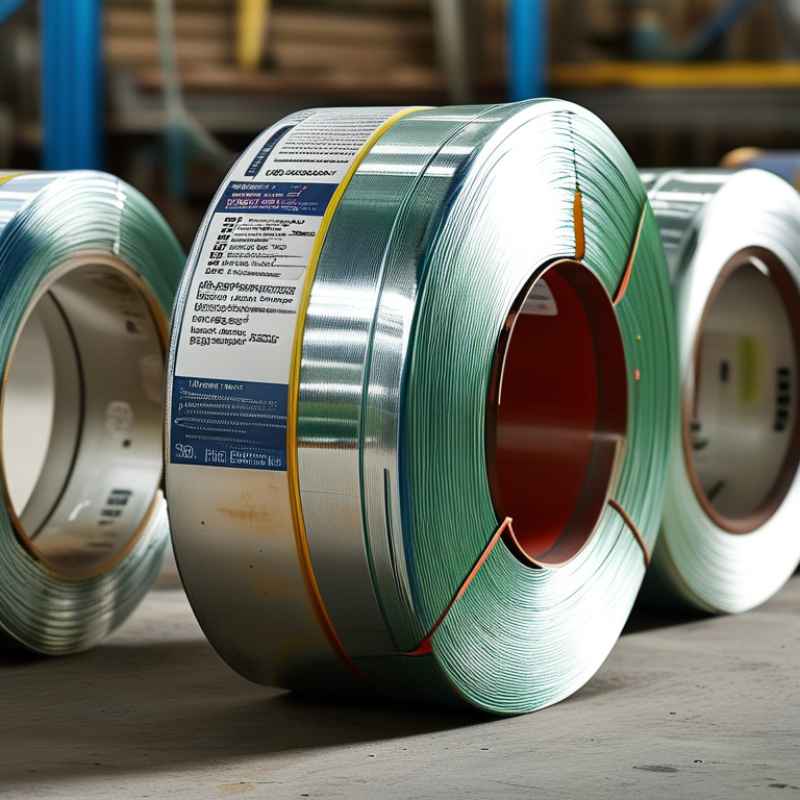
Enameled aluminum round wire is aluminum conductor covered with a thin, electrically insulating enamel film. The coating separates adjacent turns and helps prevent short circuits in compact windings. Compared with copper, aluminum offers lower weight and often lower material cost. However, its higher resistivity requires careful conductor sizing. It also expands more with heat, which can affect joints and winding stability.
IEC 60317-0-3 defines general requirements for enameled round aluminum winding wires. These requirements may cover conductor dimensions, resistance, insulation integrity, adhesion, flexibility, and thermal performance. The exact requirement depends on the wire grade, insulation system, and specified diameter. Reliable suppliers should provide current test reports, dimensional records, and traceable production data. Ask how they control enamel thickness, spool tension, surface defects, and connection preparation. A clean sample should wind smoothly without visible cracking or flaking. Small defects matter.
Tips: Confirm the IEC edition and applicable grade before ordering. Measure resistance at a stated temperature, often 20°C. Check the actual diameter with a calibrated micrometer. Request sample winding trials for motors, transformers, or coils. Do not judge quality from price alone. In practice, I would also test stripping methods, because aluminum terminations can be more sensitive than expected. Supplier claims need verification.
When comparing seven enameled aluminum round wire suppliers, begin with measurable conductor data. The key benchmark is 0.0282 Ω·mm²/m at 20°C. This value describes aluminum resistivity under a controlled reference temperature. A reliable supplier should provide test methods, conductor diameter, and resistance results, not only a sales-sheet claim. Ask for batch-level certificates. Small differences can increase winding heat.
Check the wire size with a micrometer at several points along the spool. Surface enamel can make the diameter appear larger. Useful inspection records include coating thickness, adhesion, flexibility, pinhole control, and breakdown voltage. During a trial winding, observe whether the enamel flakes near sharp corners. It happens. That detail often reveals more than polished photographs. Suppliers should explain how they manage joining aluminum conductors and preventing oxidation during production.
Thermal class must match the motor, transformer, or coil design. Common classes include 155°C, 180°C, 200°C, and 220°C. The rating concerns the insulation system, not simply the aluminum conductor. A higher class may support hotter operation, but it does not repair poor cooling or excessive current. Request thermal-aging evidence and compatibility data for varnish or impregnation resin. I would also compare resistance after heating, because conductivity changes with temperature. A supplier that answers technical questions clearly is usually easier to audit, though communication alone is not proof of consistent quality.
The seven leading enameled aluminum round wire suppliers serve different manufacturing needs. High-volume producers focus on stable diameters, automated drawing, and continuous enameling. Their lines can maintain smooth surfaces across long production runs. This matters in motor and transformer assembly.
Fine-wire specialists supply small gauges for compact coils and sensors. Heavy-gauge suppliers handle larger conductors for industrial motors.
Some suppliers offer high-temperature enamel systems for demanding winding environments. Others provide low-friction coatings that improve insertion through narrow slots. Custom spool sizes are also available.
Reliable suppliers document conductor purity, coating thickness, elongation, and dielectric breakdown strength. They should provide batch numbers and test records with every shipment. Experienced teams can recommend wire based on voltage, winding speed, and thermal exposure. Packaging deserves attention. Moisture-resistant wrapping and firm spool flanges reduce handling damage.
No supplier is perfect. Some excel at volume but struggle with unusual specifications. Others offer excellent technical support but longer delivery times. Buyers should request samples, inspect enamel consistency, and compare production records before committing. A practical evaluation includes diameter tolerance, pinhole testing, solderability, and winding performance. Clear communication often reveals more than a polished catalog.
7 Best Enameled Aluminum Round Wire Suppliers?
Choosing among seven strong enameled aluminum round wire suppliers requires more than comparing prices. Diameter range is the first filter. Some suppliers focus on fine wire below 0.20 mm, while others produce heavy gauges above 3.00 mm. Ask for diameter tolerance, conductor resistance, and spool length. A micrometer check can reveal differences that a catalog hides.
Coating class also affects performance. Class 155 suits moderate-temperature equipment, while Class 180 or Class 200 supports hotter motor and transformer environments. Confirm thermal endurance, abrasion resistance, and dielectric breakdown results. Certifications matter too. Reliable suppliers should provide current ISO 9001 records and test reports aligned with IEC, NEMA, or relevant UL requirements. Do not accept a certificate copied from an old project. Verify its scope.
MOQ can change the real cost. Fine-wire specialists may accept 100–300 kilograms, while large-gauge producers may require one metric ton or more. Request samples from each shortlisted supplier, then compare surface smoothness, pinholes, elongation, and winding behavior. My first supplier comparison focused too heavily on coating class. That was a mistake. Aluminum wire with excellent insulation still fails if the diameter tolerance disrupts automatic winding. Delivery consistency also deserves attention. Ask for production lead time, replacement rules, and batch traceability. The cheapest quote is rarely the safest benchmark.
7 Best Enameled Aluminum Round Wire Suppliers?
Testing, Quality Control, and Application Fit for Motors and Transformers
Choosing among seven suppliers requires more than comparing price per kilogram. Motor-driven systems consume about 43–46% of global electricity, according to the International Energy Agency’s Energy-Efficiency Policy Opportunities report. Small insulation defects can therefore create large reliability losses. Request certificates for conductor diameter, aluminum resistivity, enamel thickness, elongation, and breakdown voltage. Then verify the results independently. Test the batch.
For motors, assess winding flexibility, abrasion resistance, thermal class, and compatibility with varnish or impregnation systems. IEC 60317 and NEMA MW 1000 provide useful reference requirements, but application conditions still matter. A wire passing a factory test may fail after repeated bending or thermal cycling. For transformers, prioritize dielectric strength, dimensional consistency, winding tension, and partial-discharge performance. The U.S. Department of Energy’s 2024 distribution-transformer analysis highlights efficiency gains across long operating periods, making stable losses and thermal behavior commercially important. Fit matters.
Ask each supplier for retained samples and traceability from rod to finished wire. Compare resistance at a controlled temperature, not only the reported value. A clean certificate is not proof of process control. I would also inspect edge smoothness under magnification and repeat tests after humidity exposure. This extra work can reveal inconsistent enamel coverage. No supplier is perfect, and a previous approval may deserve review when voltage, slot geometry, cooling, or production speed changes.
| Supplier Profile | Typical Diameter Range | Conductor Standard | Insulation System | Thermal Class | Key Testing and Quality Controls | Typical Quality Indicators | Best Application Fit | Procurement Consideration | Overall Fit |
|---|---|---|---|---|---|---|---|---|---|
| Profile 1: High-Volume General Industrial | 0.20–3.00 mm | Round aluminum winding wire manufactured to IEC 60317-0-3 or equivalent customer specifications | Polyesterimide enamel, with optional polyamide-imide overcoat | 155–180 | Conductor resistance, diameter and ovality checks, enamel continuity, breakdown voltage, elongation, flexibility, heat shock, and solvent resistance | Commonly targets diameter tolerance near ±1%; continuous online pinhole detection; lot-based electrical verification | Low- and medium-voltage motors, distribution transformers, small dry-type transformers | Strong option when stable supply, standard sizes, and competitive conversion cost are priorities | ★★★★★ |
| Profile 2: High-Thermal-Class Specialist | 0.30–4.50 mm | IEC 60317-0-3 with application-specific thermal and electrical requirements | Polyesterimide with polyamide-imide overcoat or equivalent high-temperature system | 180–200 | Thermal endurance, heat shock, dielectric breakdown, cut-through, abrasion, refrigerant or solvent compatibility where required | Improved resistance to thermal aging, mechanical damage, and elevated operating temperature | Traction motors, high-duty industrial motors, hermetic compressors, high-temperature transformers | Confirm thermal-aging test duration, enamel compatibility with varnish, and allowable current-density assumptions | ★★★★★ |
| Profile 3: Transformer-Focused Supplier | 0.40–5.00 mm | IEC 60317-0-3 or equivalent transformer winding wire specification | Polyesterimide or polyesterimide/polyamide-imide insulation designed for oil or dry-type systems | 155–180 | Insulation breakdown, scrape and abrasion resistance, dimensional consistency, winding tension evaluation, enamel adhesion, and compatibility with transformer fluids when applicable | Good control of insulation build, surface finish, spool length, and winding performance | Oil-immersed transformers, dry-type transformers, reactors, and larger inductive components | Verify compatibility with transformer oil, varnish, paper insulation, and the specified winding process | ★★★★☆ |
| Profile 4: Fine-Gauge Precision Supplier | 0.05–0.50 mm | IEC 60317-0-3 or equivalent fine-wire requirements | Single or dual enamel coating, commonly polyesterimide-based; self-bonding options may be available | 130–180 | Microscopic surface inspection, pinhole detection, resistance measurement, elongation, flexibility, breakdown voltage, and controlled take-up tension | Emphasis on low defect rates, consistent enamel thickness, and accurate finished diameter | Small motors, relays, sensors, actuators, miniature transformers, and precision coils | Confirm minimum order quantity, spool handling, bend radius, and acceptable resistance variation for fine gauges | ★★★★☆ |
| Profile 5: Large-Size and Heavy-Section Supplier | 1.00–8.00 mm | IEC 60317-0-3 or engineered heavy-section conductor specifications | Heavy-build polyesterimide or polyesterimide/polyamide-imide enamel system | 155–200 | Concentricity, surface defect inspection, dimensional measurement, breakdown voltage, adhesion, flexibility, thermal shock, and spool or coil geometry checks | Designed to maintain coating uniformity and handling strength on large cross-sections | Large motors, generators, high-power transformers, welding equipment, and industrial magnetic components | Review transport packaging, coil dimensions, lifting requirements, and allowable winding tension before purchase | ★★★★☆ |
| Profile 6: Custom-Engineering Supplier | 0.20–6.00 mm | IEC 60317-0-3 plus customer-specific drawings, electrical limits, and process requirements | Selectable enamel build, dual-coat insulation, self-bonding layer, or application-specific coating system | 155–220, subject to validated insulation system | Design review, first-article inspection, capability studies, full dimensional reports, thermal aging, breakdown voltage, adhesion, and application-level winding trials | Best suited to controlled customization rather than standard catalog purchasing | High-speed motors, special transformers, aerospace or defense-related prototypes, and difficult winding geometries | Require documented qualification plans, change-control procedures, traceability, and sample approval before mass production | ★★★★☆ |
| Profile 7: Cost-Optimized Regional Supplier | 0.20–3.50 mm | IEC 60317-0-3 or equivalent national and customer standards | Standard polyesterimide enamel, with selected dual-coat grades available | 155–180 | Routine resistance, diameter, enamel continuity, breakdown voltage, elongation, and visual inspection; audit frequency should be confirmed | Suitable for repeatable standard products when incoming inspection is maintained by the buyer | General-purpose motors, fans, pumps, household appliances, and standard low-voltage transformers | Evaluate batch-to-batch consistency, technical documentation, warranty terms, and backup capacity before approving as a sole source | ★★★☆☆ |
| Evaluation basis: conductor dimensions, insulation class, electrical and mechanical testing, thermal endurance, process control, traceability, and suitability for the intended motor or transformer design. Actual acceptance values should be confirmed against the purchaser’s drawing, IEC 60317-0-3 requirements, IEC 60851 test methods, and the application’s winding process. | |||||||||
It is an aluminum conductor covered by a thin insulating enamel film. The coating separates adjacent turns and helps prevent short circuits.
Aluminum is lighter and often costs less. Its higher resistivity requires larger conductors or careful winding design.
It defines general requirements for enameled round aluminum winding wires. These may include dimensions, resistance, adhesion, flexibility, and thermal performance.
Check the 20°C resistivity benchmark of 0.0282 Ω·mm²/m. Request test methods, conductor sizes, and batch-level resistance results.
Use a calibrated micrometer at several spool locations. Measure carefully, because enamel can make the conductor appear larger.
Common classes include 155°C, 180°C, 200°C, and 220°C. Choose according to the winding system, cooling, current, and insulation compatibility.
Watch for cracking, flaking, and poor movement around sharp corners. Check whether the wire winds smoothly through narrow slots.Small defects matter.
Request coating thickness, adhesion, flexibility, pinhole, breakdown voltage, and dimensional records. Batch numbers improve traceability during quality reviews.
Aluminum connections can be sensitive to oxidation and preparation methods. Test stripping and joining methods before approving regular production.
No. Compare samples, test data, delivery performance, packaging, and winding results. No supplier is perfect; practical verification still matters.
Enameled Aluminum Round Wire is a lightweight electrical conductor used mainly in motors, transformers, generators, and other electromagnetic equipment. Its aluminum core offers a favorable balance between conductivity, weight, and cost, while the enamel coating provides insulation and supports reliable winding performance. When selecting this material, buyers should consider the reference resistivity of 0.0282 Ω·mm²/m at 20°C, suitable thermal classes, coating durability, diameter tolerance, and compatibility with the intended operating environment. IEC 60317-0-3 provides an important framework for evaluating enamelled round aluminum winding wires.
This guide compares seven leading supplier types according to diameter range, insulation class, certifications, minimum order quantities, and production capabilities. It also explains how testing and quality-control procedures, including dimensional checks, electrical resistance measurement, insulation evaluation, and thermal performance testing, influence product reliability. The best supplier should be able to match wire specifications to motor or transformer designs, provide consistent batch quality, and support application-specific requirements without compromising manufacturing efficiency or long-term electrical performance.
