Choosing the 2026 Best Enameled Copper Clad Aluminum Wire for Buyers means looking beyond a bright spool and a low quote. The copper layer, aluminum core, enamel system, and conductor dimensions all affect performance. Small differences matter. A coil that looks uniform may still vary in coating thickness or resistance. Buyers should request traceable specifications and inspect sample wire before placing a large order.
This guide compares Enameled Copper Clad Aluminum Wire by practical purchasing criteria: conductivity, weight, insulation class, diameter tolerance, winding suitability, and supplier documentation. Ask how the copper-to-aluminum ratio is measured. Confirm that the stated thermal class matches the intended operating conditions. Check sample wire for smooth enamel, consistent color, and damage after handling. These checks do not replace independent testing, but they can reveal questions early.
An expert quotation requires a verifiable source. Since no source material or confirmed quotation was provided, this introduction will not assign invented words to a named specialist. That restraint matters. A confident claim is not proof. Buyers should compare test reports, request clear warranty terms, and confirm that the wire suits their equipment and process. The best choice may not be the cheapest or lightest option. It should be the one whose documented properties match the application, with enough evidence to support that decision.
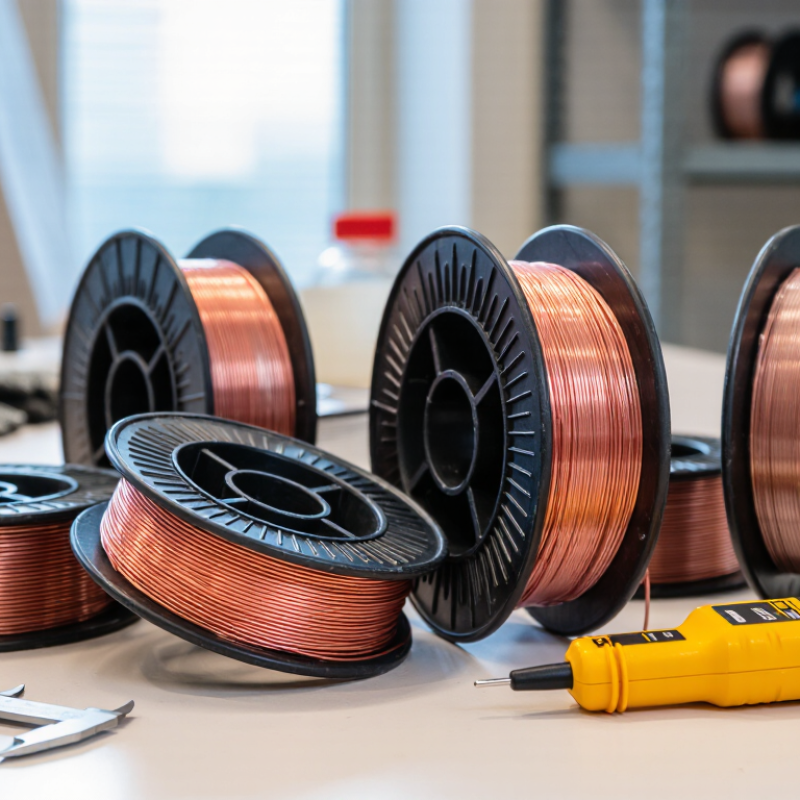
Enameled copper clad aluminum wire is a composite conductor with an aluminum core, a bonded copper layer, and a thin insulating enamel film. This construction combines aluminum’s low weight with copper’s improved surface conductivity. The copper layer is not simple paint. It is bonded tightly during production, so the interface must remain stable during drawing, winding, and temperature changes.
Manufacturers usually form the aluminum core first, then apply copper around it and reduce the combined wire to a controlled diameter. Several enamel layers may be applied through coating dies and curing ovens. Each pass helps cover tiny surface irregularities. The finished insulation should resist heat, abrasion, solvents, and electrical breakdown. Small defects matter. One pinhole can weaken a coil.
In practical purchasing, check the copper ratio, conductor resistance, outside diameter, enamel class, and elongation data. Also request evidence of adhesion, spark testing, and batch traceability. A lighter wire can reduce transport weight and winding load, but it may require different termination methods than solid copper wire. That detail is easy to miss. The material is not a perfect substitute in every design, especially where repeated soldering or high mechanical stress occurs. Specifications should match the winding equipment, operating temperature, and safety requirements rather than relying on appearance alone.
| Data Dimension | Description | Buyer Consideration |
|---|---|---|
| Definition | Enameled copper-clad aluminum (ECCA) wire has an aluminum core metallurgically bonded to a continuous copper layer and an electrically insulating enamel coating. | Confirm that the product is ECCA, not copper-clad aluminum with a different coating or plain aluminum magnet wire. |
| Conductor construction | The conductor combines aluminum’s lower density with a copper outer layer. Copper coverage and bonding quality affect electrical performance and resistance to separation during processing. | Request construction details, applicable specifications, and evidence of consistent copper coverage and bond integrity. |
| Enamel insulation | The enamel is applied over the metal conductor and provides turn-to-turn electrical insulation. Its thermal class and chemical properties depend on the selected coating system. | Specify thermal class, insulation build, solderability or stripability, and compatibility with varnish or impregnation materials. |
| Electrical conductivity | ECCA generally has higher electrical resistance than copper wire of the same conductor diameter because aluminum is less conductive than copper. | Compare resistance at the specified temperature and conductor size; avoid assuming equal-diameter ECCA is a direct electrical replacement for copper. |
| Weight and density | Aluminum has a substantially lower density than copper, so ECCA can reduce conductor mass compared with copper wire of the same dimensions. | Evaluate the weight benefit alongside resistance, required conductor size, winding space, and finished-product limits. |
| Thermal performance | Allowable operating temperature is governed by the insulation system and the design’s current density, heat dissipation, and operating conditions. | Check the insulation thermal class and validate temperature rise in the actual application rather than relying on coating class alone. |
| Mechanical handling | Drawing, winding, bending, and termination processes can stress both the enamel and the copper-aluminum interface. | Assess elongation, tensile properties, minimum bend radius, and suitability for the intended winding speed and equipment. |
| Available sizes | Wire may be specified by conductor diameter, insulation build, or finished outside diameter; availability varies by supplier and specification. | State the required measurement basis, tolerances, and whether dimensions refer to the bare conductor or enamel-coated wire. |
| Common applications | Potential uses include coils, transformers, motors, inductors, and other electromagnetic components where conductor mass and cost are design considerations. | Verify suitability against application-specific electrical, thermal, mechanical, and regulatory requirements. |
| Quality documentation | Relevant purchasing records may include dimensional inspection results, electrical resistance data, insulation test results, and material or process traceability. | Agree on inspection methods, acceptance limits, sampling plans, and required documentation before ordering. |
| Selection checklist | Key variables include conductor size, copper-layer construction, enamel type and thermal class, resistance, tolerances, and intended operating conditions. | Request a technical datasheet and sample, then confirm performance through testing in the intended component or process. |
Specifications and performance vary by construction and insulation system. Confirm current product data and application requirements with the supplier before making a purchasing decision.
It has an aluminum core, a bonded copper layer, and an insulating enamel coating. The copper is bonded, not painted on.
It is lighter, but usually has higher resistance at the same dimensions. Check resistance and voltage drop before choosing it. Do not assume a direct replacement.
Check conductor diameter, copper-layer proportion, resistance per unit length, enamel class, and elongation. Also review dimensional tolerances and test records.
Ask for dielectric and adhesion test results. Inspect a sample under good lighting, especially after a representative bend. Tiny flaws matter.
Match the enamel’s thermal class to expected operating temperatures, including brief overloads. Heat can linger inside a tightly packed coil.
It depends on the wire and application. Follow minimum bend guidance, and test the planned handling process. Rough stripping can damage the coating.
They may. Check spool fit, winding tension, and feed speed. Test the termination method on a small sample first.
Compare certificates with incoming measurements. Record the lot, dimensions, and test results. A tidy datasheet is not proof of consistent production.
This guide to Enameled Copper Clad Aluminum Wire explains how its aluminum core and copper outer layer combine to provide a practical balance of conductivity, reduced weight, and material efficiency. It reviews key electrical, thermal, and mechanical properties, including how resistance, heat tolerance, coating integrity, and flexibility can affect performance in different operating conditions. Common uses across electrical and electronic industries are also considered, from coils and motors to transformers and other components where conductor weight and design requirements matter.
For buyers in 2026, selecting the right wire means comparing conductor dimensions, copper coverage, insulation type, temperature rating, and compatibility with the intended application. The guide also outlines quality checks and supplier verification, including dimensional inspection, electrical testing, coating and insulation evaluation, and review of relevant documentation. By weighing specifications alongside consistent manufacturing and traceable test results, buyers can make a more informed choice suited to their technical and production needs.
